
ptc heating


PTC Heater Function    PTC Design Guidelines    PTC Heater Facts


PTC Heaters

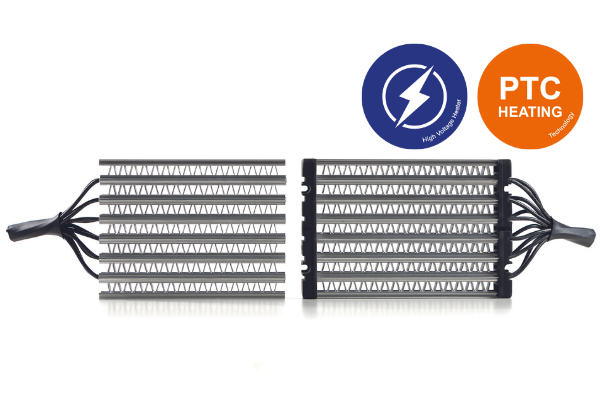
Positive temperature co-efficient - PTC heating elements are small ceramic stones with self temperature limiting characteristics. PTC stones have fast heating response times and plateau once the pre-defined reference temperature is reached. The shape of these stones can be be designed to be square, rectangular, round, ring or doughnut style. Above the reference temperature, the semiconducting and ferro-electrical properties of the ceramic are utilized to produce a rise in resistance of several orders of magnitude, and hence produce it's self limiting properties.

This resistance rise can be experienced over a temperature range of a few degrees Celsius. This PTC attribute results in a heating element that self-regulates at a pre-set temperature and automatically varies its wattage in order to maintain that pre-set temperature. Hence, a greater degree of thermal dissipation (cooling) will result in higher power.

The materials used are doped polycrystalline ceramics based on barium titanate. Once the ceramic body has been formed through processes including blending, milling, drying and sintering, metallized contacts are applied to the surface to facilitate electrical connection.


                     PTC Heating


PTC Features & Benefits

  • Safe through temperature limiting characteristics
  • Dynamic, self regulating, and therefore energy efficient
  • All voltages from 12 V to 240 V; special voltage applications up to 800 V
  • Dual voltages 12-24 V, 100-240 V
  • PTC surface temperatures can be set from 40° C / 104° F to 280° C / 536° F
  • Temperature tolerances +/- 5° C
  • Compact design
  • High power densitity
  • Long lifetime
  • Reliable
  • UL, CSA and VDE recognised
  • Custom configurations available in regards to size, inrush current, temperature, voltage, and power output
   

top

PTC Heater Function

PTC Heater Function


top

PTC Design Guidelines/Considerations

Listed below are some items that should be taken into consideration when a PTC heater is specified:

   
  • Specify target temperature to be maintained
  • Specify maximum allowable temperature
  • Specify the time required to heat the media to target temperature
  • Identify the type of media to be heated
  • Identify any potential thermal barriers between heater and media
  • Specify maximum allowable inrush current at startup of element
  • Voltage
  • Inlet air temperature/CFM rating
  • Space/size constraints for heater
  • It is often times possible to eliminate temperature controls in applications when the following conditions are met:
    • When there is not a heat up time requirement that would exceed the dynamic range of the PTC by requiring many more watts than what is necessary to maintain temperature once the medium is at it's target temperature.
    • If the medium to be heated does not have to be maintained at temperatures above freezing but should not exceed certain maximum temperatures. For example in an outdoor application, the medium must not fall below 50° F /10° C and never exceed 140° F / 60° C.
    • When the temperature tolerance of the medium can accept +/- 5° C.


top


DBK USA, Inc.
100 Corporate Drive, Suite G, Spartanburg, SC 29303
Phone: 864 599 1600 - Fax : 864 578 6464
email: info@dbk-usa.com